Belajar Puisi
Curator: Adi Osman
Bagi generasi yang tumbuh pada 2000-an di Indonesia, serial One Piece menjadi tontonan sekaligus bacaan yang hingga kini masih berlanjut kisahnya. Bendera Jolly Roger kru Topi Jerami adalah simbol yang akrab bagi mereka: lambang persahabatan, kebebasan, dan perjuangan melawan ketidakadilan. Namun, belakangan simbol ini melampaui pagar fiksi dan menjelma pernyataan politis yang kuat. Kaum muda Indonesia menggunakannya untuk menyuarakan keresahan tentang kemiskinan, eksploitasi hukum, lingkungan, dan hak asasi manusia, tepat di tengah penyambutan 80 tahun kemerdekaan Indonesia. One Piece dijadikan cermin realitas, bahasa artistik yang menjembatani pikiran mereka dengan publik sekaligus negara.
Akan tetapi, respons dari pemangku kuasa dan pendengungnya justru menunjukkan sikap defensif. Jolly Roger, yang dimaknai anak muda sebagai simbol perlawanan terhadap otoritas korup, mereka tafsirkan sebagai bendera gerakan makar. Di sejumlah daerah, bahkan muncul larangan mengibarkan bendera atau membuat mural terkait One Piece. Karena fenomena ini masif dibahas di media sosial—yang sejarahnya memang terbukti mampu menggerakkan massa (Arab Spring, protes besar Indonesia 2019, dan lain-lain)—maka pengaitan dengan makar menjadi “wajar” dalam kerangka upaya negara menjaga status quo.
Barangkali sikap tersebut tampak berlebihan, terlebih karena menyasar sebuah karya fiksi. Tetapi begitulah negara bekerja: dengan fiksi. Negara dan para pemainnya menyadari bahwa fiksi (yang diundangkan) adalah metode ampuh untuk menstabilkan, menggerakkan, atau menundukkan massa; untuk menyembunyikan kenyataan getir; atau untuk memikat rakyat dengan bayangan masa depan yang imajiner. Dalam hal ini, komunikasi warga dan negara yang dijembatani bendera One Piece justru dijawab dengan ketertutupan, tanpa dialog reflektif atau penerimaan atas situasi kritis hari ini. Inilah titik berangkat menonton film We Are Inside karya Farah Kassem. Film ini, meski berbeda medium dan konteks, menawarkan eksplorasi personal dan intim tentang tantangan serupa, tetapi dengan cara yang lebih menjanjikan.
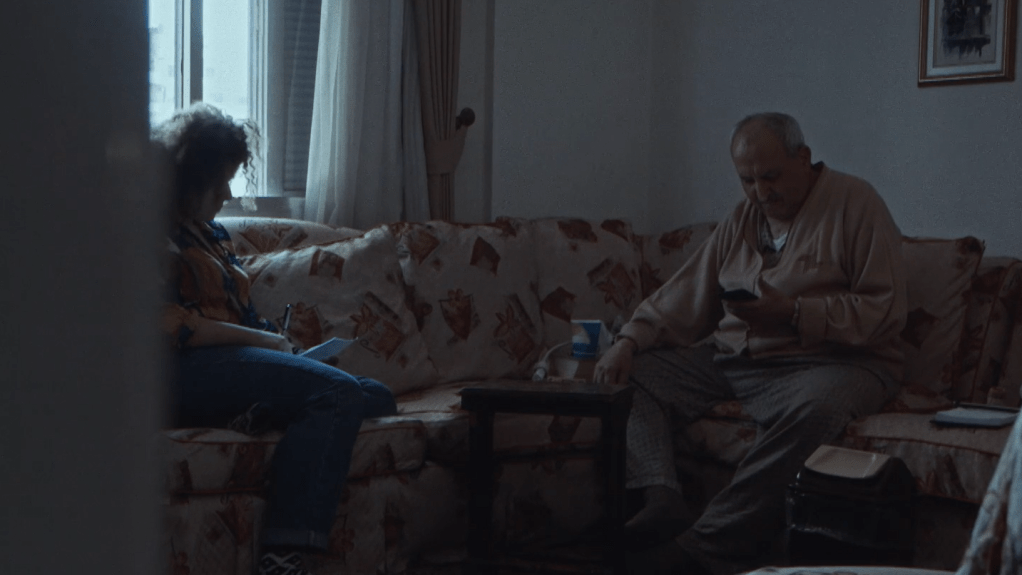
We Are Inside adalah potret intens hubungan Farah Kassem dengan ayahnya, Mustapha—seorang penyair terkemuka yang menua—di tengah gejolak revolusi 2019 di Tripoli, Lebanon. Farah, seorang sineas yang kembali dari perantauan, terdorong untuk merawat ayahnya yang sakit sekaligus menemaninya di hari-hari senja. Dorongan itu diperkuat ketakutannya akan kehilangan memori tentang Mustapha, sebuah trauma yang berakar dari pengalaman masa kecilnya ketika ia kehilangan ingatan tentang sang ibu yang telah wafat.
Di sinilah puisi menjadi pusat narasi. Dalam kesehariannya bersama sang ayah, Farah belajar menulis puisi dan mengikuti klub puisi yang rutin dihadiri Mustapha. Puisi berfungsi sebagai jembatan, ruang belajar, sekaligus bahasa sinema. Dalam salah satu adegan, Farah membacakan puisinya. Mustapha menekankan pentingnya ritme dan rima dalam tradisi puisi Arab, dan menyebut karya Farah lebih menyerupai prosa. Farah pun bergabung dalam pertemuan klub puisi ayahnya, meminta masukan dari rekan-rekan sang ayah, lalu membacakan puisinya kembali pada pertemuan berikutnya. Kali ini, ia mendapat sambutan hangat, baik dari anggota klub maupun dari ayahnya.
Dalam film ini, prinsip-prinsip puisi turut meresapi sinemanya. Objek sehari-hari dijadikan metafora dan anasir keintiman, rumah, bahkan negara. Burung yang bersarang di jendela menjadi anasir puisi tentang kepulangannya; mesin cuci berkaki timpang dan siaran televisi pun diolah menjadi elemen puisi visual. Bingkai—jendela, pintu, dinding, layar televisi—menjadi rima sekaligus ritme film. Situasi luar rumah dihadirkan lewat bingkai jendela, sementara kehidupan dalam rumah terbingkai pintu atau dinding. Sementara itu, sempat muncul pula gambar yang menampilkan peristiwa langsung di lokasi. Gambar-gambar ini melebur dengan peristiwa domestik melalui strategi bingkai (melalui pintu, dinding, jendela, dan layar televisi) tersebut.
Secara puitis, pilihan perspektif di dan dari dalam rumah adalah konsekuensi logis dari situasi Lebanon: revolusi yang berlanjut ke masa pandemi, ketika protes masih berlangsung meski dibatasi. Hubungan Farah dan ayahnya, yang direkam melalui bingkai-bingkai domestik, menjadi metafora paradoks atas kondisi negara. Dari situ, film ini mengajukan tawaran: belajar cara memahami dunia di luar diri, menerima kritik, bahkan—seperti yang dilakukan Farah—mengejawantahkan proses belajar itu ke dalam film. Dalam konteks bendera One Piece, ketika otoritas memilih bersikap cemburu demi menjaga kuasa, sementara warga mengekspresikan strategi politik yang puitis di media sosial maupun keseharian, film ini berdiri di tengah diskusi: “belajar puisi” untuk saling memahami, menerima kritik, sekaligus merangkul krisis.
Kembali ke alasan utama Farah merekam: kekhawatiran akan melupakan sang ayah. Mustapha kemudian menjelaskan, “masa lalu adalah 60%, masa kini 10%, masa depan 20%,” dan bahwa “melupakan juga bagian dari memori.” Pada titik ini, We Are Inside melampaui kisah ayah dan anak. Ia berbicara tentang bagaimana generasi muda sudah pasti menjadi pelanjut pengetahuan generasi sebelumnya. Mereka tidak sekadar mewarisi masa lalu, melainkan juga mengolahnya: menerima, menafsirkan, dan terkadang “melupakan” untuk membuka ruang bagi dinamika zaman yang kelak menjadi milik mereka sendiri.
For the generation that grew up in the 2000s in Indonesia, the One Piece series has been both a TV show and a comic book that continues to captivate them to this day. The Jolly Roger flag of the Straw Hat Pirates is a familiar symbol to them: representing friendship, freedom, and a fight against injustice. However, in recent times, this symbol has transcended the boundaries of fiction and evolved into a powerful political statement. Young Indonesians are using it to voice their concerns about poverty, legal exploitation, environmental exploitation, and human rights issues, right in the midst of celebrating Indonesia’s 80th anniversary of independence. One Piece has become a mirror of reality, an artistic language that bridges their thoughts with the public and the state.
However, the response from the authorities and their supporters has been defensive. Jolly Roger, which is interpreted by young people as a symbol of resistance against corrupt authorities, is interpreted by them as a flag of treason. In some areas, there have even been bans on flying the flag or creating murals related to One Piece. Since this phenomenon has been widely discussed on social media—which has a history of being able to mobilize the masses (Arab Spring, the 2019 Indonesian protests, and others)—the association with treason becomes “reasonable” within the framework of the state’s efforts to maintain the status quo.
Perhaps those attitude seems excessive, especially since it targets a work of fiction. But that is how the state works: with fiction. The state and its actors realize that fiction (which is legislated) is a powerful method for stabilizing, mobilizing, or subjugating the masses; for hiding harsh realities; or for enticing the people with visions of an imaginary future. In this case, the communication between citizens and the state, bridged by the One Piece flag, lacked openness, without a reflective dialogue or acceptance of today’s critical situation. This is the starting point for watching Farah Kassem’s film We Are Inside. Though differing in medium and context, this film offers a personal and intimate exploration of similar challenges, but in a more promising way.
We Are Inside is an intense portrait of Farah Kassem’s relationship with her father, Mustapha—a prominent aging poet—amidst the turmoil of the 2019 revolution in Tripoli, Lebanon. Farah, a filmmaker returning from abroad, is compelled to care for her ailing father while accompanying him in his twilight years. This urge is fueled by her fear of losing her memories of Mustapha, a trauma rooted in her childhood experience of losing her memories of her deceased mother.
This is where poetry becomes the center of the narrative. In her daily life with her father, Farah learns to write poetry and joins a poetry club that Mustapha regularly attends. Poetry serves as a bridge, a learning space, and a cinematic language. In one scene, Farah recites her poem. Mustapha emphasizes the importance of rhythm and rhyme in the Arab poetic tradition, and notes that Farah’s work more closely resembles prose. Farah joins her father’s poetry club meeting, seeks feedback from her father’s peers, and recites her poem again at the next meeting. This time, she receives a warm reception, both from the club members and from her father.
In this film, poetic principles permeate the cinema. Everyday objects are used as metaphors and devices of intimacy, home, and even country. A bird nesting in a window becomes a poetic device about homecoming; a lopsided washing machine and television broadcasts are also crafted into elements of visual poetry. Frames—windows, doors, walls, television screens—serve as both the rhyme and rhythm of the film. External situations are presented through window frames, while domestic life is framed by doors or walls. Meanwhile, there are also images depicting events directly at the location. These images are integrated with domestic events through the framing strategy (through doors, walls, windows, and television screens).
Poetically, the choice of perspective in and from within the house is a logical consequence of the situation in Lebanon: a revolution that continued into the pandemic, when protests were still ongoing despite restrictions. The relationship between Farah and her father, captured through domestic frames, serves as a paradoxical metaphor for the state of the nation. From there, the film offers a proposal: learning to understand the world beyond oneself, accepting criticism, and even—as Farah does—embodying that learning process within the film itself. In the context of the One Piece flag, when authorities choose to act jealously to maintain power, while citizens express poetic political strategies on social media and in daily life, the film stands at the center of the discussion: “learning poetry” to understand one another, accept criticism, and embrace the crisis.
Returning to Farah’s main reason for recording: her concern about forgetting her father. Mustapha then explains, “the past is 60%, the present is 10%, the future is 20%,” and that “forgetting is also part of memory.” At this point, We Are Inside transcends the story of father and daughter. It speaks to how the younger generation is inevitably the successor to the knowledge of the previous generation. They do not merely inherit the past but also process it: receiving, interpreting, and sometimes “forgetting” to make room for the dynamics of the times that will eventually become their own.
Films
Curator’s biography
Adi Osman (lahir 1994, Padang) merupakan seorang penulis, kurator, dan pembuat filem. Ia pernah terlibat sebagai direktur artistik di Andalas Film Festival 2017-2018, kurator di Sumbar Film Festival 2018, kurator program regional Jogja-NETPAC Asian Film Festival 2020, dan kurator Jakarta Content Week 2022-2023. Saat ini ia aktif di Milisifilem Collective dan Garak.id
Adi Osman (b. 1994, Padang) is a writer, curator, and filmmaker. He was involved as artistic director in Andalas Film Festival 2017-2018, as a curator in Sumbar Film Festival 2018, curator for regional program of Jogja-NETPAC Asian Film Festival 2020, and curator for Jakarta Content Week 2022-2023. He is currently active in Milisifilem Collective and Garak.id


