Neraca yang Membisu: Mengaudit Ketimpangan Pascakolonial Melalui Sinema
Reporter:
Angka dalam laporan keuangan tidak pernah benar-benar netral. Melalui program pemutaran The Unbalanced Balance Sheet, kurator Ali Satri Efendi membedah ilusi kesejahteraan pascakolonial dengan meminjam logika akuntansi. Berangkat dari pengalamannya sebagai staf keuangan, Ali menangkap sebuah ironi kelas yang berurat akar di sekitar kita: pekerja rendahan harus mengumpulkan setumpuk kuitansi detail hanya untuk menagih uang pengganti yang tidak seberapa, sementara elite perusahaan bebas mencairkan ratusan juta rupiah bermodal selembar kertas “titipan direksi”. Sebagaimana kritik Tony Tinker yang diangkat dalam catatan kuratorial ini, neraca yang pada akhirnya diklaim “seimbang” di atas kertas sebenarnya hanyalah instrumen untuk merasionalisasi dan melanggengkan relasi kuasa yang timpang.

Logika pembukuan hierarkis ini, meminjam pandangan Samir Amin dan Frantz Fanon, terus dirawat dalam skala negara. Angka rata-rata pertumbuhan ekonomi nasional sering dipamerkan pemerintah sebagai indikator keberhasilan, padahal ia sekadar tabir yang menutupi jurang kelas. Kelas borjuis nasional pascakemerdekaan pada dasarnya hanya mengambil alih kursi penjajah tanpa mengubah fondasi ekonominya. Mereka meneruskan sistem ekstraksi kekayaan yang sama, memastikan kemakmuran tetap berputar di kalangan atas, sementara mayoritas rakyat tetap hidup dalam kelangkaan.

Ketimpangan ekstrem yang disembunyikan oleh angka-angka resmi tersebut direkam secara telanjang oleh Djibril Diop Mambéty dalam Touki Bouki (1973). Berlatar Dakar pada era 1970-an yang tengah digulung arus urbanisasi akibat kekeringan Sahel, Mambéty menolak menggunakan narasi verbal yang menggurui. Kameranya menelusuri wajah kota yang terbelah, membiarkan permukiman kumuh berdebu dan kawasan elite yang rimbun berbicara sendiri.
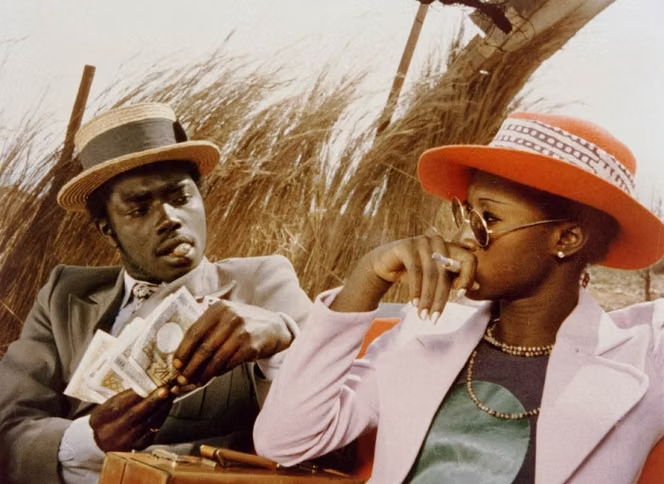
Impresi terkuat dari Touki Bouki justru muncul dari caranya memanipulasi elemen air sebagai penanda status sosial paling absolut. Mambéty seolah memindahkan logika “kas kecil vs. titipan direksi” ke dalam urusan hajat hidup. Bagi Mory dan Anta, hamparan laut adalah komoditas impian sekaligus rute pelarian menuju Prancis—pusat kapitalisme yang ironisnya menumpuk kekayaan dari perampasan tanah Afrika. Namun di daratan, air kehilangan nilai romantisnya dan berubah menjadi krisis yang mengeringkan tubuh. Ada rasa perih yang nyata saat melihat perempuan dan anak-anak dipaksa menjadikan raga mereka sebagai infrastruktur distribusi air di tengah kelangkaan. Pemandangan ini langsung dipertentangkan dengan keseharian kaum elite yang bebas menceburkan diri ke dalam kolam renang tanpa perlu berebut antrean. Privilese tertinggi kelas penguasa bukanlah tumpukan uang, melainkan akses berlebih pada sumber daya vital yang direbut dari hidup jelata.
Kegelisahan yang dibangun Mambéty ini kemudian diaudit lebih dalam lewat Mascon: A Massive Concentration of Black Experiential Energy (2024) karya The Otolith Group. Jika Touki Bouki adalah laporan neracanya, film esai berdurasi 35 menit ini berfungsi sebagai analisa rasionya. Mascon merakit ulang potongan dari 19 karya Mambéty dan Ousmane Sembène menjadi sebuah mosaik forensik. The Otolith Group membenturkan berbagai variabel penderitaan pascakolonial—eksploitasi buruh, ketergantungan ekonomi, dan ilusi modernitas—ke dalam ritme montase yang repetitif dan menuntut perhatian penuh.

Elemen yang paling menancap dari Mascon adalah desain soniknya. Transisi antar-fragmen visual dibalut ambiguitas audio yang meleburkan deru ombak dengan bising mesin industri. Pertukaran identitas suara ini sukses memicu disorientasi; penonton dibiarkan menebak apakah yang terdengar adalah nyanyian alam yang merekam sejarah perbudakan, atau deru mesin yang terus memompa ekstraksi mineral Afrika. Manipulasi ini mengunci kesimpulan bahwa deru modernitas yang dibanggakan kaum elite hanyalah keriuhan yang sengaja diciptakan untuk menutupi eksploitasi sistemik.The Unbalanced Balance Sheet memaksa kita untuk menengok kembali apa yang selama ini kita sebut sebagai keseimbangan ekonomi. Lewat tatapan langsung Mambéty di jalanan Dakar dan dekonstruksi arsip The Otolith Group, sinema membuktikan kemampuannya sebagai instrumen audit tandingan. Selama struktur ekstraktif gaya kolonial terus dipelihara, kehidupan sosial tak akan pernah mencapai ekuilibrium. Neraca yang selalu jomplang itulah monumen paling jujur dari peradaban kapitalis yang kita diami hari ini.
The numbers in financial statements are never truly neutral. Through the film screening program The Unbalanced Balance Sheet, curator Ali Satri Efendi dissects the illusion of postcolonial prosperity by borrowing the logic of accounting. Drawing from his experience as a finance employee, Ali captures a deep-rooted class irony all around us: low-wage workers must collect detailed receipts just to claim a meager reimbursement, while corporate elites can freely withdraw hundreds of millions of rupiah based on a single piece of paper labeled “directors’ withdrawals.” As highlighted in Tony Tinker’s critique, which is referenced in this curatorial note, a balance sheet that is ultimately claimed to be “balanced” on paper is, in reality, merely an instrument for rationalizing and perpetuating unequal power relations.
This logic of hierarchical accounting—borrowing from the perspectives of Samir Amin and Frantz Fanon—continues to be perpetuated on a national scale. The government often boasts about average national economic growth figures as an indicator of success, when in fact they are nothing more than curtains covering the class divide. The post-independence national bourgeoisie essentially just took over the colonizers’ seats without changing the economic foundations. They continued the same system of wealth extraction, ensuring that prosperity remained confined to the upper circles, while the majority of the people continued to live in scarcity.
The extreme inequality concealed by these official figures is explicitly recorded by Djibril Diop Mambéty in Touki Bouki (1973). Set in Dakar during the 1970s—a city swept up in a wave of urbanization triggered by the Sahel drought—Mambéty refuses to rely on a didactic verbal narrative. His camera traces the face of a divided city, letting the dusty slums and lush elite neighborhoods speak for themselves.
The strongest impression left by Touki Bouki actually comes from the way it manipulates the element of water as the most obvious sign of social status. Mambéty seems to transpose the logic of “petty cash vs. director’s withdrawal” onto the necessities of life. For Mory and Anta, the expanse of the sea is both a dream commodity and an escape route to France—the center of capitalism that, ironically, amasses wealth through the plunder of African land. Yet on land, water loses its romantic value and becomes a crisis that parches the body. There is a real sense of pain when witnessing women and children forced to use their own bodies as water distribution infrastructure amid scarcity. This scene stands in stark contrast to the daily lives of the elite, who are free to dive into their swimming pools without having to wait in line. The greatest privilege of the ruling class is not a pile of money, but rather excessive access to vital resources seized from the lives of the common people.
The anxiety constructed by Mambéty is then audited more deeply through Mascon: A Massive Concentration of Black Experiential Energy (2024) by The Otolith Group. If Touki Bouki is the balance sheet, this 35-minute essay film serves as the rational analysis. Mascon reassembles fragments from 19 works by Mambéty and Ousmane Sembène into a forensic mosaic. The Otolith Group juxtaposes various variables of postcolonial suffering—labor exploitation, economic dependence, and the illusion of modernity—within a repetitive montage rhythm that demands the viewer’s full attention.
The most striking element of Mascon is its sonic design. The transitions between visual fragments are shrouded in an audio ambiguity that blends the roar of the waves with the clatter of industrial machinery. This interplay of sound identities successfully induces disorientation; the audience is left to guess whether what they hear is nature’s song chronicling the history of slavery, or the roar of machines relentlessly pumping out Africa’s mineral resources. This manipulation reinforces the conclusion that the roar of modernity, so proudly touted by the elite, is merely a clamour deliberately created to cover up systemic exploitation. The Unbalanced Balance Sheet forces us to reexamine what we have long referred to as economic balance. Through Mambéty’s direct gaze on the streets of Dakar and The Otolith Group’s deconstruction of archival material, cinema proves its capacity as an instrument of counter-audit. As long as colonial-style extractive structures continue to be maintained, social life will never achieve equilibrium. That perpetually lopsided balance sheet is the most honest monument of the capitalist civilization we inhabit today.
Reporter Biography