Candrawala Bagian 2: Membaca Keberagaman Cerita dan Eksplorasi Personal Para Pembuatnya
Reporter:
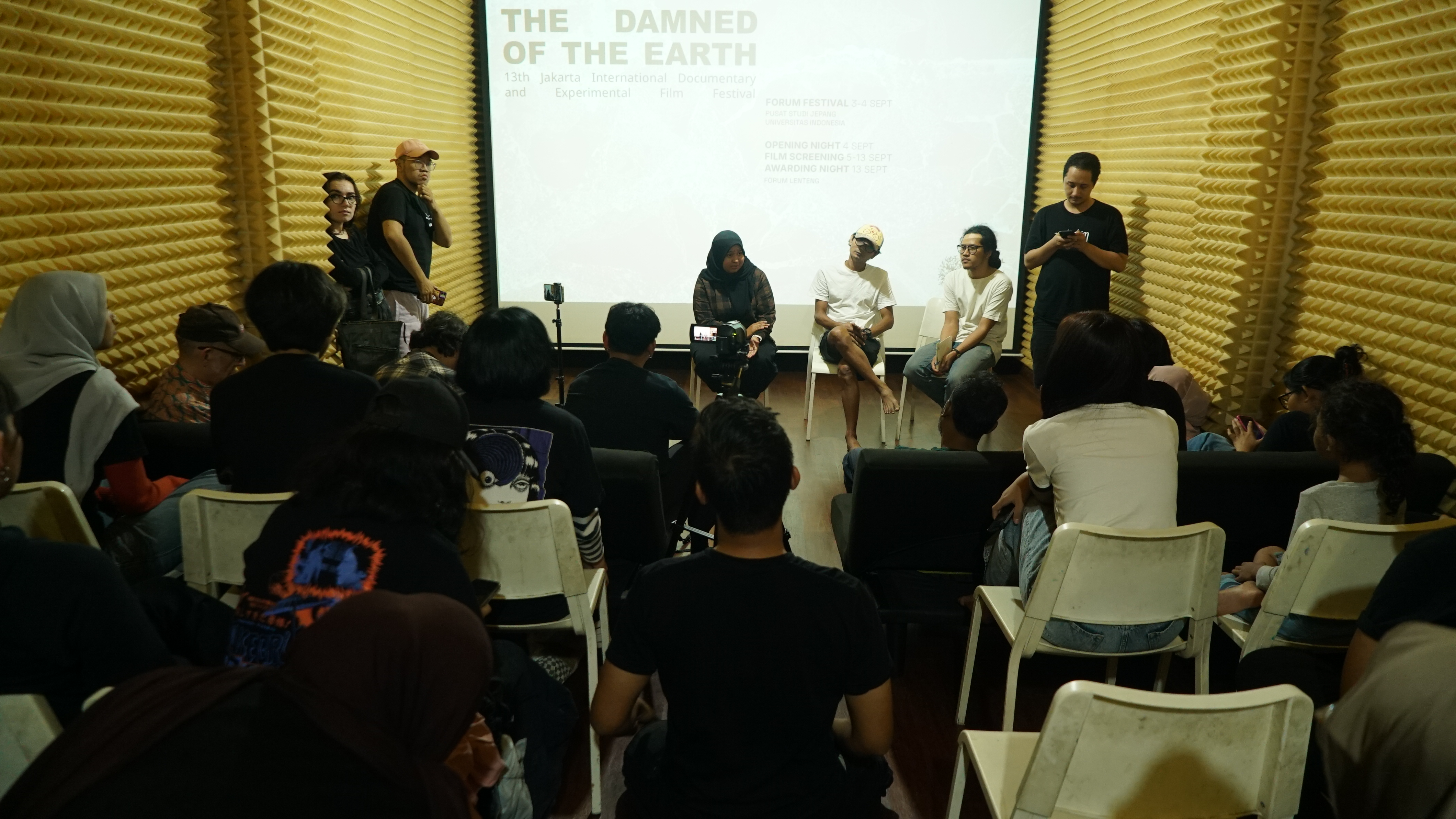
Pada hari Sabtu tanggal 12 September 2026, paruh kedua Candrawala dalam judul Mengungkap Misteri Kehidupan Manusia Melalui Cerita (Revealing the Mysteries of Human Life Through Stories) berlangsung sekitar jam 7 malam. Diputar dua filem yaitu She Taking Care of Me (2025) karya Annisa Faradila dan Lenggak-Lenggok (Dancing with the Body) (2025) karya Andi Imam Prakasa.

Ananta Wijayarana selaku kurator memberi pengantar bahwa dua filem ini mewakili sisi eksplorasi manusia sebagai makhluk pencerita yang terus mencari perspektif dan mempertanyakan ulang. Tema yang diangkat pun beragam mulai dari yang bersifat keseharian, konflik internal dalam keluarga, sampai tentang eksistensi sebuah kelompok di kala pandemi.
Filem pertama yaitu She Taking Care of Me memberikan pengalaman menonton yang terasa personal tentang potret skoliosis, hubungan antara dua saudara dan ibu, serta luka internal yang dibawa dalam sebuah rumah yang kesepian. Annisa memilih format still image dengan materi analog 16mm yang berhasil menegaskan tema kerapuhan yang dibawanya. Ada sesuatu yang terasa muram dalam eksplorasinya menuturkan tentang keluarga walau filemnya tetap terasa jujur dan puitis.

Filem kedua adalah Lenggak Lenggok yang dibuka dengan keseharian para penari yang tinggal bersama di sebuah gubuk sederhana. Awalnya filem menunjukkan keseharian mereka yang tampak biasa; saat mereka tidur dan bangun pagi, menelepon keluarga atau mengobrol. Lalu kemudian sutradara memasukkan adegan para penari Jaipong yang mulai berdandan dan merepetisinya berkali-kali. Apakah ini dihadirkan sebagai bentuk keseharian yang melebur atau untuk mengisi kekosongan akan lemahnya materi cerita? Saya awalnya berpikir durasi keseharian dibalik panggung yang cukup lama di filem ini menyimpan maksud tersendiri atau akan lepas dari rute narasi “di balik panggung vs di atas panggung” yang kerap kita temukan di banyak filem. Namun kenyataannya, filem tetap mengambil rute yang sama yaitu memperlihatkan apa yang terjadi di atas panggung di paruh terakhir durasi. Sebagai dokumenter, ia mengobservasi dengan baik. Namun filemnya tidak tampak bicara lebih banyak tentang perjuangan para perempuan di dalamnya atau ketimpangan sistem yang terjadi dalam kelompok penari Jaipong tersebut. Beberapa potong teks di akhir filem juga terasa tidak perlu, mengingat apa yang disajikan di sepanjang filem harusnya sudah berbicara banyak.
Dalam sesi Q&A, Annisa Faradila menjelaskan alasannya memilih still image daripada moving image karena pengalaman personalnya yang pernah bekerja di lab fotografi. Ibunya juga suka memotret sehingga penggunaan materi analog ini diharapkan menjadi seperti perekat hubungannya dengan ibu. Proses memakai materi 16mm juga dianggap Annisa sebagai fase ia belajar lagi tentang sensitivitas dan kehati-hatian menggunakan medium selain juga menjadi awalan ia mengenal tentang sejarah sinema.

Ananta selaku kurator juga bertanya pada sutradara Andi Imam Prakasa tentang pemilihan fase belakang panggung sebelum akhirnya menyorot fase depan panggung. Saat awal, filem bersifat observasional sebelum berubah ke format wawancara. Bagaimana perubahan bentuknya? Andi menjawab bahwa ia mencari bentuk paling jujur terhadap realitas sehingga membutuhkan intervensi perubahan itu. Selain itu, Andi menceritakan bagaimana kehidupan musik Jaipong begitu dekat dengannya sedari kecil.
Ragam reaksi penonton terekam dalam sesi tanya jawab malam itu. Mulai dari penonton yang mengapresiasi bentuk analog dalam She Taking Care of Me yang menyiratkan banyak makna sampai pertanyaan tentang penggunaan hitam putih dari konteks kuratorial dan pemilihan filem. Andi mengatakan bahwa pemilihan hitam putih karena ia tidak mau ada distraksi warna dan ingin fokus pada kehidupan para penari Jaipong. Hitam putih juga dinilai dapat memperlihatkan kontras kehidupan belakang dan depan panggung dengan baik.

Sementara Annisa menjawab pemilihan hitam putih berkaitan dengan proses kerja lab lewat material analog. Annisa menuturkan bahwa ia meminjam kerapuhan material itu dengan sadar untuk memvisualkan gambar. Dalam warna, ada banyak kondimen yang terasa. Sementara lewat hitam putih, ada kesederhanaan. Sementara itu, Ananta selaku kurator mengatakan alasannya memilih filem-filem ini bukan sebatas alasan warna hitam putih melainkan eksperimentasi visual dan isu keragaman budaya yang diangkat. Menurutnya, bagaimana cara pembuatnya mengemas narasi atau mengeksplor cerita adalah yang paling penting. Dua filem ini menandai hal itu: sebuah usaha untuk mengemas sesuatu yang personal dan ditampilkan kepada khalayak luas sebagai keresahan yang bisa terasa amat universal.
On Saturday, September 12, 2026, the second half of Candrawala, titled Mengungkap Misteri Kehidupan Manusia Melalui Cerita (Revealing the Mysteries of Human Life Through Stories), took place at around 7 p.m. Two films were screened: She Taking Care of Me (2025) by Annisa Faradila and Lenggak-Lenggok (Dancing with the Body) (2025) by Andi Imam Prakasa.
Ananta Wijayarana, the curator, introduced the two films as representing the exploratory side of human beings as storytelling creatures who continuously seek out perspectives and question them anew. The themes explored are diverse, ranging from everyday life and internal family conflicts to the existence of a community during the pandemic.
The first film, She Taking Care of Me, offers an intimate viewing experience through its portrayal of scoliosis, the relationship between two siblings and their mother, and the internal wounds carried within a lonely household. Annisa employs a still-image format using 16mm analogue material, which reinforces the sense of fragility at the heart of the film. There is a certain gloominess to her exploration of family life, while the film remains honest and poetic in its approach.
The second film, Lenggak-Lenggok, opens with the everyday lives of dancers living together in a simple hut. At first, the film presents seemingly ordinary routines: sleeping and waking in the morning, calling their families, and chatting with one another. The director then introduces scenes of Jaipong dancers getting dressed and made up, which are repeated several times. Is this repetition presented as an extension of their everyday lives, or does it fill a void created by the lack of narrative material? Initially, I thought the relatively long duration devoted to life behind the stage suggested a particular intention, or that the film might depart from the familiar “behind the scenes versus on stage” trajectory often found in documentary films. In the end, however, the film follows that same route, showing what happens on stage in the latter half of its runtime. As a documentary, it observes its subjects effectively. Yet the film does not seem to speak much further about the struggles of the women within the group or the systemic inequalities that may exist among the Jaipong dancers. Some of the text passages at the end also feel unnecessary, considering that what has been presented throughout the film should already speak for itself.
During the Q&A session, Annisa Faradila explained her decision to use still images rather than moving images, drawing from her personal experience working in a photography laboratory. Her mother also enjoys photography, and Annisa hoped that working with analogue material could become a kind of bond connecting her to her mother. Working with 16mm was also, for Annisa, a process of relearning sensitivity and attentiveness in working with a medium, while marking the beginning of her encounter with the history of cinema.
Ananta, the curator, also asked director Andi Imam Prakasa about his decision to focus on the dancers’ lives behind the stage before eventually turning to their performances on stage. The film initially takes an observational approach before shifting into an interview format. How did this change in form come about? Andi explained that he was searching for the form that would be most truthful to the reality he was depicting, which required this shift in approach. He also shared how closely Jaipong music has been connected to his life since childhood.
A range of audience responses emerged during the Q&A that evening. Some viewers appreciated the use of analogue imagery in She Taking Care of Me and the layers of meaning it suggested, while others raised questions about the use of black and white in relation to the curatorial context and the selection of the films. Andi explained that he chose black and white because he did not want color to become a distraction and instead wanted to focus on the lives of the Jaipong dancers. He also felt that black and white effectively highlighted the contrast between life behind and in front of the stage. Annisa, meanwhile, explained that her use of black and white was connected to the laboratory process and working with analogue material. She deliberately embraced the fragility of the material as part of the visual process. “There are many condiments in color,” she explained, whereas black and white offered a sense of simplicity.
Ananta, meanwhile, explained that his selection of these films was not based solely on their use of black and white, but also on their visual experimentation and the cultural diversity explored within them. For him, the most important aspect is how the filmmakers shape their narratives and explore their stories. These two films embody that approach: an attempt to shape something deeply personal and present it to a wider audience as a concern that can resonate as something profoundly universal.
Reporter Biography