Pulang
Curator: Kayla Miska
Setiap kali pulang ke rumah nenek, terdapat salah satu hal istimewa yang selalu saya cari. Bukan hanya masakan khas nenek atau suasana rumahnya, melainkan percakapan. Saya senang mendengar nenek dan saudara-saudara saya berbicara menggunakan bahasa Sunda. Di kota, saya jarang sekali mendengar bahasa itu. Saya hanya benar-benar mendengarnya ketika saya pulang. Dalam perjalanan menuju rumah nenek, saya juga mulai menyadari perubahan yang pelan-pelan terjadi. Sawah yang dulu membentang kini berganti menjadi deretan perumahan. Jalan semakin ramai, tanah mulai dikeruk, dan pemandangan yang saya hafal sejak kecil perlahan berubah.
Pengalaman lain yang mengubah cara saya memandang hidup adalah ketika saya menemani ibu selama sakit hingga akhirnya ia meninggal. Di ruang rumah sakit, kami justru menjadi jauh lebih dekat. Kami banyak berbincang, mengenang masa lalu, kadang tertawa, kadang menangis bersama. Di sela rasa sakitnya, ibu lebih sering membicarakan masa depan saya daripada dirinya sendiri. Ia berharap saya bisa hidup dengan layak dan menjadi pribadi yang tangguh. Baru setelah kepergiannya saya menyadari bahwa harapan itu adalah bentuk lain dari tindakannya untuk terus merawat.
Belakangan ini saya juga sering melihat berita tentang semakin banyak anak muda yang memilih mengakhiri hidupnya. Saya mulai bertanya-tanya, apa sebenarnya yang sedang terjadi? Apakah kita telah kehilangan hubungan yang membuat kita merasa menjadi bagian dari kehidupan itu sendiri?
Pertanyaan-pertanyaan itulah yang kemudian saya temukan kembali dalam rangkaian tiga film ini berjudul Hair, Paper, Water (2025), Memories and My Mother (2025), dan Hour of the Flower (2025). Rangkaian film ini tidak memberikan jawaban yang pasti. Namun ketiganya sama-sama mengajak kita memikirkan kembali arti pulang.
Kata ‘pulang’ di sini bukan sekadar kembali ke rumah. Dalam rangkaian ini pulang adalah kembali menyadari hubungan yang selama ini membuat kehidupan tetap berlangsung, melalui hubungan dengan bahasa, keluarga, ingatan, dan alam. Sebab kehidupan manusia tidak pernah berjalan sendiri dan kita hidup di dalam sebuah siklus yang lebih besar daripada diri kita. Di sini alam telah memiliki caranya sendiri untuk merawat kehidupan melalui pergantian musim, tumbuhan yang tumbuh dan layu, air yang terus mengalir, hingga tubuh manusia yang lahir, menua, dan kembali menjadi bagian dari alam.
Rangkaian film dalam program ini sama-sama berbicara tentang tindakan merawat, tetapi melalui tiga posisi yang berbeda. Dalam Hair, Paper, Water memperlihatkan seorang nenek masyarakat Rục yang mewariskan bahasa, pengetahuan tumbuhan obat, dan sejarah asal-usulnya kepada sang cucu. Pengetahuan itu tidak diwariskan melalui sekolah atau buku, melainkan melalui percakapan, tubuh, dan praktik sehari-hari. Sementara itu, dunia di sekitar mereka terus berubah akibat banjir, pembukaan hutan, dan perpindahan generasi muda ke kota. Film ini menunjukkan bahwa perubahan mungkin tidak dapat dihentikan, tetapi pengetahuan masih bisa diteruskan.
Dalam Memories and My Mother, tindakan merawat berpindah kepada generasi berikutnya. Seorang anak berusaha menjaga ingatan tentang ibunya melalui sinema ketika sang ibu perlahan kehilangan memorinya sendiri. Foto-foto keluarga, dokumentasi keseharian, dan suara anak yang mengenang masa lalu menjadi arsip bagi kehidupan seorang ibu yang tidak pernah sempat menulis kisahnya sendiri. Bersamaan dengan itu, lanskap di sekitarnya juga berubah. Rumah-rumah baru terus dibangun, tanah dikeruk, rumah kontrakan harus ditinggalkan, sementara ruang-ruang yang dahulu menjadi tempat tumbuhnya kenangan perlahan berganti wajah.
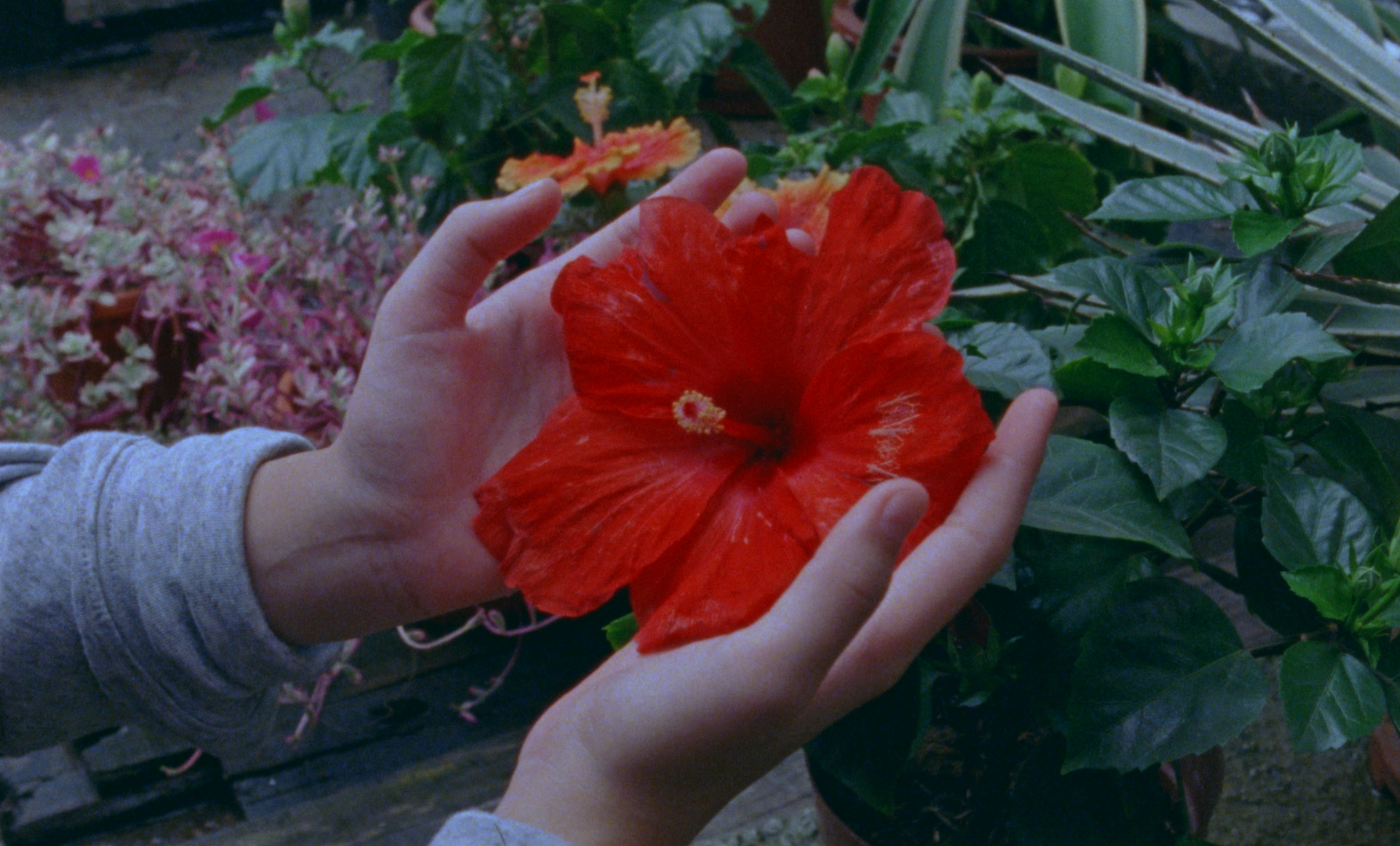
Sementara itu, Hour of the Flower memperluas gagasan tersebut ke ruang yang lebih besar. Film ini memperlihatkan empat fase kehidupan perempuan, yaitu seorang anak yang mengalami menstruasi pertama, seorang gadis muda yang bunuh diri, seorang ibu yang mengandung tetapi tidak melahirkan, dan seorang nenek yang terus memutar rekaman puisi Hour of the Flower. Melalui hubungan antara tubuh perempuan, bunga, tumbuhan, dan musim, film ini mengingatkan bahwa kehidupan manusia selalu berada di dalam siklus alam yang lebih besar.
Jika dibaca bersama, ketiga film ini membentuk satu perjalanan. Hair, Paper, Water berbicara tentang generasi tua yang merawat pengetahuan. Memories and My Mother memperlihatkan generasi muda yang merawat ingatan. Hour of the Flower kemudian menunjukkan bahwa bahkan tindakan merawat manusia pun berlangsung di dalam siklus alam yang telah lebih dulu merawat kehidupan.
Ketiga film ini tidak menjelaskan gagasannya melalui hubungan gabungan montase antara gambar, suara, durasi. Dalam Hair, Paper, Water, film dibuka dengan layar hitam. Sebelum satu gambar pun muncul, terdengar suara seorang nenek mengucapkan kata-kata sederhana dalam bahasa Rục: night, fire, water, cave. Setelah suara selesai diucapkan, barulah gambar hadir. Pola ini terus berulang sepanjang film. Bahasa selalu hadir lebih dahulu daripada gambar. Pilihan montase ini memperlihatkan bahwa bahasa bukan sekadar alat komunikasi, tetapi cara sebuah komunitas mengenali dunianya. Nama sungai selalu hadir bersama sungainya. Nama tumbuhan selalu diikuti oleh tubuh tumbuhan itu sendiri. Film tidak sedang membuat kamus bahasa Rục, tetapi memperlihatkan bahwa pengetahuan lahir dari hubungan manusia dengan alam.
Film ini membiarkan kamera mengikuti para saudara perempuan tua memasuki hutan. Melalui durasi yang panjang membuat kita menyaksikan bagaimana daun dipilih, akar dicabut, tanaman direbus, lalu pengetahuan itu diajarkan kepada cucu. Melalui film ini pengetahuan tidak hadir sebagai informasi, melainkan sebagai sesuatu yang dipraktikkan bersama. Bagian akhir film, montase mempertemukan legenda masyarakat Rục tentang tulisan di kulit rusa yang dimakan anjing dengan gambar alat berat yang menebang hutan akasia, lalu muncul teks sederhana ‘Acacia pulp is used to make paper.’ Melalui rangkaian montase ini muncul pertanyaan siapa yang memiliki kesempatan untuk menulis sejarah? dan bagaimana nasib sebuah sejarah yang justru hilang bersama hutan?
Dalam Memories and My Mother, montase bekerja dengan cara yang berbeda. Film dibuka dengan kutipan Ramlal Joshi yang berbunyi, “My story may one day be found. But my mother’s story? A mother’s story cannot be written on paper. A mother’s story can only be written in the heart, with the ink of tears.” Kutipan ini tidak hanya menjadi pembuka film, tetapi juga mengajak kita mempertanyakan bagaimana kisah seorang ibu dapat disimpan. Jika hidupnya tidak pernah dituliskan, lalu di mana ingatan tentang dirinya akan tinggal? Sutradara kemudian mempertemukan foto-foto keluarga dengan dokumentasi keseharian sang ibu di masa kini. Suara anak terus mengenang masa lalu, sementara tubuh ibu perlahan kehilangan ingatannya sendiri. Perubahan tubuh ibu berjalan bersamaan dengan perubahan lanskap di sekitarnya. Rumah-rumah baru bermunculan, tanah dikeruk, rumah kontrakan ditinggalkan. Sesuatu yang berubah dan menghilang bukan hanya ruang, tetapi tempat di mana kenangan pernah tumbuh. Ketika ibu tidak lagi mampu mengingat, sinema menjadi medium penyimpanan memori untuk mengingat dan mengarsipkan.
Sementara itu, Hour of the Flower menggunakan montase untuk memperlihatkan bahwa manusia bukan pusat kehidupan. Tubuh perempuan terus dipertemukan dengan bunga, seperti ketika adegan menstruasi pertama berdampingan dengan bunga yang mulai mekar. Bunga tidak lagi menjadi sebuah keindahan, melainkan cara alam menjelaskan kehidupan manusia. Puncaknya hadir ketika tumbuhan justru menjadi pihak yang ‘memotret’ manusia. Relasi yang selama ini menempatkan manusia sebagai pengamat, diputar balik. Dalam film ini alam bukan lagi objek yang diamati, melainkan agensi yang ikut melihat, membentuk, dan menjaga kehidupan.
Program ini dipresentasikan dalam festival yang mengangkat pemikiran Frantz Fanon. Karena itu, ketiga film ini tidak hanya berbicara tentang keluarga atau alam, tetapi juga tentang bagaimana cara kita memahami dunia dibentuk oleh sejarah kolonial. Dalam bab Colonial War and Mental Disorders dari bukunya berjudul The Wretched of the Earth (1963), Fanon menunjukkan kasus-kasus mental dampak dari kolonialisme itu, bahwa kolonialisme tidak hanya merampas tanah dan kekuasaan politik. Ia juga meninggalkan cara pandang yang memutus hubungan manusia dengan tanah, budaya, bahasa, bahkan dirinya sendiri. Memperlihatkan luka kolonial bukan hanya luka sejarah, tetapi juga bagaimana dampak dari luka mempengaruhi cara kita melihat dunia.
Warisan cara pandang itu masih terasa hingga hari ini. Alam dipahami sebagai sumber daya yang harus dikelola dan harus memiliki nilai ekonomi. Pengetahuan baru dianggap bisa dipercaya keasliannya ketika ditulis dalam arsip resmi. Sementara bahasa lisan, pengetahuan lokal, cerita keluarga, dan kerja-kerja merawat sering kali dianggap biasa saja karena tidak menghasilkan nilai ekonomi atau tidak tercatat dalam sejarah. Pandangan ini yang juga hadir dalam kritik yang disampaikan oleh Chandra Talpade Mohanty dalam esainya berjudul Under Western Eyes, ia menolak anggapan bahwa perempuan di negara-negara non-Barat hanyalah korban yang pasif (336-337). Dalam rangkaian film ini menunjukkan para perempuan (Timur) tampil sebagai penjaga kehidupan. Mereka mewariskan bahasa, menyimpan pengetahuan, merawat keluarga, menjaga ingatan, dan menjadi penghubung antara manusia dengan alam. Cara pandang tersebut juga sejalan dengan pemikiran Maria Mies, yang melihat bahwa kerja-kerja merawat baik merawat keluarga, tubuh, pengetahuan, maupun alam sering kali tidak dianggap sebagai pekerjaan yang penting karena tidak menghasilkan keuntungan ekonomi (dalam Mohanty 344-345). Padahal justru dari kerja-kerja merawat itulah yang membuat kehidupan dapat terus berlangsung.
Ketiga film ini menawarkan cara melihat yang berbeda. Mereka tidak mengajak kita kembali ke masa lalu atau menolak modernitas, melainkan mereka menawarkan sebuah bentuk kesadaran untuk membangun kembali hubungan yang mulai renggang–mulai dari hubungan dengan keluarga, dengan bahasa, dengan pengetahuan lokal, dan terutama dengan alam. Dalam Hour of the Flower, alam bahkan menjadi agensi terbesar yang menjaga kehidupan melalui ritmenya sendiri. Musim berganti, bunga mekar lalu layu, tubuh perempuan mengalami siklus. Alam memiliki cara sendiri dalam merawat dirinya dan kita sendiri sebagai manusia mungkin mulai lupa bagaimana caranya merawat.
Karena itu, ‘pulang’ dalam program ini bukan sekadar kembali ke rumah. Pulang adalah kembali belajar membaca ritme kehidupan. Pulang adalah menyadari bahwa manusia bukan pusat dunia, melainkan bagian dari jaringan kehidupan yang jauh lebih besar. Barangkali itulah yang sedang diingatkan oleh ketiga film ini. Bahwa hidup tidak selalu bisa kita kendalikan dan kita harus menyadari ritme alam itu sendiri.
Daftar Pustaka:
Mohanty, Chandra Talpade. “Under western eyes: Feminist scholarship and Colonial Discourses.” Boundary 2, vol. 12, no. 3, 1984, pp. 333–358, https://doi.org/10.2307/302821.
Every time I return to my grandmother’s house, there is something special that I look forward to. It is not simply my grandmother’s cooking or the atmosphere of her home, but the conversation we have. I love listening to my grandmother and relatives speak Sundanese. In the city, I rarely hear the language. I truly hear it only when I return home. On the journey to my grandmother’s house, I have also begun to notice the gradual changes taking place around me. The rice fields that once stretched across the landscape have been replaced by rows of housing developments. The roads are becoming busier, the land is being excavated, and the landscape I have known since childhood is slowly changing.
Another experience that changed the way I understand life was accompanying my mother through her illness until she passed away. In the hospital room, we somehow became much closer. We talked extensively, remembered the past, sometimes laughed, and sometimes cried together. Even in the midst of her illness, my mother spoke more often about my future than about herself. She hoped that I would be able to live a decent life and grow into a resilient person. Only after she was gone did I realize that this hope was another form of her continuing act of care.
Recently, I have also been seeing increasing reports about young people choosing to end their lives. I began to wonder: what is actually happening? Have we lost the relationships that make us feel that we belong to life itself?
These questions are what I encountered again in this three-film program: Hair, Paper, Water (2025), Memories and My Mother (2025), and Hour of the Flower (2025). The three films do not offer definite answers. Instead, they invite us to reconsider what it means to return home.
Here, “returning home” does not simply mean going back to a house. Across this program, returning home means becoming aware again of the relationships that allow life to continue: our relationships with language, family, memory, and nature. Human life never exists in isolation. We live within a cycle much larger than ourselves. Nature has its own ways of sustaining life: through the changing seasons, plants that grow and wither, water that continues to flow, and human bodies that are born, age, and eventually return to nature.
The films in this program all speak of acts of care, but from three different positions. Hair, Paper, Water portrays an elderly Rục woman passing on language, knowledge of medicinal plants, and stories of origin to her grandchild. This knowledge is not transmitted through schools or books, but through conversation, the body, and everyday practices. Meanwhile, the world around them continues to change through flooding, deforestation, and the migration of younger generations to the cities. The film suggests that while change may not be stopped, knowledge can still be passed on.
In Memories and My Mother, the act of care moves toward the next generation. A child attempts to preserve the memory of his mother through cinema as she gradually loses her own memories. Family photographs, recordings of everyday life, and the child’s voice recalling the past become an archive of a mother’s life—a life that never had the opportunity to write its own story. At the same time, the surrounding landscape is also changing. New houses continue to emerge, land is excavated, rented homes have to be abandoned, and spaces that once held memories slowly take on new forms.
Meanwhile, Hour of the Flower expands this idea into a larger space. The film presents four stages of women’s lives: a young girl experiencing her first menstruation, a young woman who dies by suicide, a mother who becomes pregnant but does not give birth, and a grandmother who repeatedly plays a recording of the poem Hour of the Flower. Through the relationship between the female body, flowers, plants, and the seasons, the film reminds us that human life is always situated within a larger cycle of nature.
Read together, the three films form a journey. Hair, Paper, Water speaks of an older generation caring for and preserving knowledge. Memories and My Mother portrays a younger generation caring for memory. Hour of the Flower then suggests that even human acts of care take place within a cycle of nature that has been sustaining life long before us.
The three films do not explain these ideas solely through montage as a combination of image, sound, and duration. In Hair, Paper, Water, the film opens with a black screen. Before a single image appears, we hear an elderly woman pronounce simple words in the Rục language: “night, fire, water, cave.” Only after the words have been spoken does the image appear. This pattern continues throughout the film. Language consistently precedes the image. This montage choice suggests that language is not merely a tool of communication, but a way through which a community recognizes and understands its world. The name of a river appears together with the river itself. The name of a plant is followed by the physical presence of that plant. The film is not creating a dictionary of the Rục language; rather, it demonstrates that knowledge emerges from the relationship between humans and nature.
The film allows the camera to follow the older women as they enter the forest. Through its extended duration, we witness how leaves are selected, roots are pulled from the ground, plants are boiled, and knowledge is passed on to the grandchild. Knowledge does not appear here as information, but as something practiced collectively. Toward the end of the film, the montage brings together a Rục legend about writing on deer skin that was eaten by a dog with images of heavy machinery cutting down an acacia forest. This is followed by a simple text: “Acacia pulp is used to make paper.” Through this sequence, the film raises questions: Who has the opportunity to write history? And what happens to a history that disappears together with the forest?
In Memories and My Mother, montage operates differently. The film opens with a quotation by Ramlal Joshi: “My story may one day be found. But my mother’s story? A mother’s story cannot be written on paper. A mother’s story can only be written in the heart, with the ink of tears.” The quotation does not merely introduce the film; it also asks how a mother’s story can be preserved. If her life was never written down, where will the memory of her remain? The filmmaker then brings together family photographs and recordings of the mother’s everyday life in the present. The child’s voice continuously recalls the past, while the mother’s body gradually loses its own memories. The transformation of her body takes place alongside the transformation of the surrounding landscape. New houses emerge, land is excavated, and rented homes are abandoned. What changes and disappears is not only the physical space, but also the places where memories once grew. When the mother can no longer remember, cinema becomes a medium for storing memory—for remembering and archiving.
Meanwhile, Hour of the Flower uses montage to suggest that humans are not the center of life. The female body is continuously placed in relation to flowers, such as when the scene of a girl’s first menstruation is juxtaposed with a flower beginning to bloom. The flower is no longer merely an object of beauty; it becomes a way through which nature speaks about human life.The film reaches its most striking point when plants themselves become the ones who “photograph” humans. A relationship that has traditionally positioned humans as observers is reversed. Nature is no longer a passive object to be observed, but an agency that also looks, shapes, and sustains life.
This program is presented within a festival that engages with the thought of Frantz Fanon. For this reason, the three films do not speak only about family or nature, but also about how our ways of understanding the world have been shaped by colonial histories. In the chapter “Colonial War and Mental Disorders” from The Wretched of the Earth (1963), Fanon demonstrates through various cases the psychological effects of colonialism. Colonialism does not merely dispossess people of land and political power. It also leaves behind ways of seeing that sever human relationships with land, culture, language, and even with the self. To reveal colonial wounds, therefore, is not only to revisit historical violence, but also to understand how its effects continue to shape the way we see the world.
The legacy of this worldview can still be felt today. Nature is often understood as a resource to be managed and assigned economic value. Knowledge is considered legitimate or authentic when it is recorded within official archives. Meanwhile, oral languages, local knowledge, family stories, and acts of care are often treated as ordinary because they do not produce economic value or enter official histories. A similar critique can be found in Chandra Talpade Mohanty’s essay “Under Western Eyes,” in which she rejects the assumption that women in non-Western countries are merely passive victims (336–337). Across this program, women from the East appear instead as custodians of life. They pass on language, preserve knowledge, care for their families, maintain memory, and become mediators between humans and nature. This perspective also resonates with Maria Mies’s understanding of care work. The labor of caring—for families, bodies, knowledge, and nature—is often undervalued because it does not necessarily generate economic profit (as discussed in Mohanty 344–345). Yet it is precisely through these acts of care that life is able to continue.
The three films offer another way of seeing. They do not ask us to return to the past or reject modernity. Instead, they propose a form of awareness through which we might rebuild relationships that have begun to weaken: our relationships with family, language, local knowledge, and, above all, nature. In Hour of the Flower, nature becomes the larger agency that sustains life through its own rhythms. Seasons change, flowers bloom and wither, and the female body moves through its own cycles. Nature has its own ways of caring for and sustaining itself, and perhaps, as humans, we have begun to forget how to care.
For this reason, “returning home” in this program does not simply mean going back to a house. Returning home means learning once again how to read the rhythms of life. It means recognizing that humans are not the center of the world, but part of a much larger network of life. Perhaps this is what these three films remind us of: that life cannot always be controlled, and that we must learn to recognize the rhythms of nature itself.
Work Cited
Mohanty, Chandra Talpade. “Under Western Eyes: Feminist Scholarship and Colonial Discourses.” Boundary 2, vol. 12, no. 3, 1984, pp. 333–358. https://doi.org/10.2307/302821.
Films


Curator’s biography
Kayla Miska adalah seniman yang aktif berkarya melalui medium drawing, sketsa, sound, dan video art. Ia merupakan anggota Milisifilem Collective angkatan Kenanga, sebuah ruang studi dan praktik film. Dalam praktik artistiknya, Kayla banyak mengangkat tema keseharian, dengan mengamati hal-hal sederhana di sekitar sebagai sumber gagasan dan material karya.
Kayla Miska is an artist actively working across drawing, sketching, sound, and video art. She is a member of Milisifilem Collective batch Kenanga, a space for film study and practice. In her artistic practice, Kayla often explores themes of everyday life, observing simple things and experiences around her as sources of ideas and artistic material.